
Funding Support
for Carolina Homeowners
Facing foreclosure or tax issues? Need to sell fast? Get a confidential, no obligation consultation today.
When you’re in a tough spot, you don’t just need answers: you need options. Our Carolina-based funding offers fast, flexible solutions when traditional lenders won’t. We say yes when others say no. As established southern USA home buyers, we provide reliable funding solutions to property owners who need a guaranteed Carolina home cash offer on a timeline that works best for their family.
- 100% Confidential
- No Fees or Commissions
- 7 Day a Week Support
Our Simple, 3-Step Path to Your Solution
We’ve removed the stress, paperwork, and uncertainty from the process. Getting help is as simple as…

Step 1
Tell Us What’s Going On
Call us or fill out our form. There is zero pressure. This first call is 100% free, confidential, and you are under no obligation. You’ll speak with a local Carolina expert who will listen to your situation with respect and empathy.

Step 2
Receive Your Custom Solutions
This is what makes us different. We don’t have a “one-size-fits-all” approach. After a quick assessment, we will present you with multiple clear solutions. This could be a fast cash offer, a private loan to get you caught up, a plan to take over your payments, or another creative strategy. Working directly with a dedicated fast house buyer allows you to review cash terms without paying real estate commissions or staging costs.

Step 3
You Get Paid and Move Forward
You are in complete control. You pick the path that works best for you and your family. We handle all the paperwork and can close in as little as 7 days, or we can work on whatever timeline you need. Selling your home directly to local investors is often much easier than working with traditional companies that purchase homes.
Our Services
Tailored Solutions for Your Home & Finance
Our team provides personalized solutions to help homeowners protect their equity, avoid foreclosure, and move forward with confidence. We offer private capital solutions for property owners who are actively evaluating companies that buy homes for immediate cash purchases or mortgage relief.

Tell Us What’s Going On
Call us or fill out our form. There is zero pressure. This first call is 100% free, confidential, and you are under no obligation. You’ll speak with a local Carolina expert who will listen to your situation with respect and empathy.

Take Over Mortgage Payments
If you’re struggling to keep up with your mortgage in North or South Carolina, our Take Over Mortgage Payments option gives you an alternative path.

Fix & Flip Financing
Ready to transform distressed properties into profit? Our Fix & Flip Financing provides fast, flexible funding for North and South Carolina investors.

What Is Your
Biggest Challenge Right Now?
We’ve helped hundreds of homeowners across the Carolinas by focusing on their unique, personal situations. We are problem-solvers who specialize in complex cases. Find your situation below to see how we can provide an immediate, effective solution.
Behind on Property Taxes?
A delinquent tax bill is a serious threat. A tax lien can lead to a foreclosure sale by the county, and you can lose your home for a fraction of its value. We can provide the funds to pay off the taxes immediately, remove the lien, and give you time to get back on your feet. Local property owners rely on our capital resources when companies that buy houses in South Carolina offer flexible loan alternatives to save home equity.
Facing Foreclosure?
The foreclosure process in the Carolinas is fast and frightening. We can act faster. We provide immediate, certain solutions to stop the auction, protect your credit, and help you walk away with dignity and peace of mind. Property owners facing urgent auction dates turn to us when companies that buy houses in North Carolina provide immediate debt intervention strategies.
Need to Sell a Problem Property?
Inherited a house you can’t afford? Tired of bad tenants? Does your home have major foundation issues, a leaking roof, or mold? We buy houses in any condition (“as-is”) for cash. No repairs, no cleaning, no hassle. Our direct acquisition team serves as experienced cash home buyers in South Carolina who buy distressed properties without requiring repairs or cleanouts.

About Fix it Money
Fix it Money was created for one reason: to help North & South Carolina residents going through personal hardships on their home. Gary Leavitt of Leavitt Capital Group has 20+ years in work-out transactions, private lending, fix-n-flip, and new construction. His goal for Fix it Money was to give owners an option no matter where they are in the process.
As a principal builder in Phoenix, Gary developed over $70,000,000 in new construction projects, which included affordable housing, condo conversions, and multi-family units. Gary started in the business by flipping homes where he met his wife, Christine. They transitioned into full-time investors and owned/operated multiple apartment buildings, a real estate brokerage, and a property management company. Our extensive background in private transactions makes our firm a trusted choice among companies that buy houses for cash throughout North and South Carolina.
We’re Your Local Carolina Funding.
We Aren’t a National Franchise or a Slow Bank
When you’re in a tough spot, you don’t want to be a case number. You want to talk to a real person who has the flexibility and compassion to help. National “we buy houses” franchises want to give you one option: a low-ball offer. Banks give you no options.
Our goal isn’t just to buy your house; it’s to find the right solution for you. We live and work here in the Carolinas, and we are dedicated to helping our neighbors. Unlike slow institutional mortgage lenders, we work directly with owners who want to sell a house fast in North Carolina without waiting months for traditional loan underwriting.
| Feature | FixItMoney (Your Funding) | “We Buy Houses” Franchises | Banks & Lenders |
|---|---|---|---|
| Our Goal | Find a Win-Win Solution | Buy at a Steep Discount | Follow Strict Guidelines |
| Flexibility | High (Cash, Loans, Payments) | Low (Cash Offer) | None |
| Credit Check | No Credit Check Required | No | Yes |
| Fee | None. No Commissions. | None | Yes (Origination, etc.) |
| Personal Touch | Deal Directly with Our Family | Call Center / Local Rep | Banker / Loan |
| Speed | Fast (24 hours -10 days) | Fast (7–21 Days) | Slow (30–60+) |

Solutions for Every Situation, All Across the Carolinas
Find your solution—choose a service to view local markets.
Stop Foreclosure
We provide immediate, certain solutions to stop the auction and protect your credit. We are experts in both NC’s non-judicial and SC’s judicial foreclosure processes. Homeowners navigating county auctions often select our firm over traditional companies that buy homes because we offer specialized foreclosure relief options.
North Carolina Markets
- Charlotte Foreclosure Help
- Raleigh Foreclosure Help
- Greensboro Foreclosure Help
- Fayetteville Foreclosure Help
South Carolina Markets
- Charleston Foreclosure Help
- Columbia Foreclosure Help
- Greenville Foreclosure Help
- Myrtle Beach Foreclosure Help
Sell My House Fast
Get a fair cash offer and close on your schedule. We buy homes “as-is” in any condition, so you don’t need to make any repairs or clean a thing.
North Carolina Markets
- We Buy Houses Charlotte
- We Buy Houses Raleigh
- We Buy Houses Greensboro
- We Buy Houses Fayetteville
South Carolina Markets
- We Buy Houses Charleston
- We Buy Houses Columbia
- We Buy Houses Greenville
- We Buy Houses Myrtle Beach
Property Tax Delinquency Help
A tax lien can lead to a foreclosure sale by the county. We can provide the funds to pay off the taxes immediately, remove the lien, and give you time to get back on your feet.
- NC & SC Property Tax Lien Solutions
- Pay Off Delinquent Taxes Fast
Private Home Equity Funding
Banks said no? If you have equity but can’t pass a bank’s strict checks, we can provide the capital you need to pay off debt, make repairs, or handle an emergency, based on your home’s value, not your credit score.
- Access Your Home's Equity (NC/SC)
- Private Loans for Homeowners
Real Stories from Carolina Homeowners We’ve Helped
Don’t just take our word for it. See how we’ve provided real solutions to people just like you, right here in the Carolinas.
Highly Recommend !

“I was two weeks from the auction date in Charlotte and didn’t know what to do. The bank wouldn’t even talk to me. I called Fix It Money, and they were incredible. They didn’t judge me; they just listened… They bought my house, stopped the foreclosure, and saved my credit. I can’t thank them enough.”
Highly Recommend !
“I inherited a house in Charleston that needed tons of work I couldn’t afford. It was full of stuff, the roof was leaking, and I just felt overwhelmed. Fix It Money gave me a fair cash offer and bought it ‘as-is.’ I didn’t have to fix or clean a thing. The process was so easy and took a huge weight off my shoulders.”
Highly Recommend !
“The bank wouldn’t give me a loan to pay my delinquent property taxes because of my credit. I was at risk of losing my home. Fix It Money provided a small private loan using my home’s equity. The tax bill was paid, and I got back on my feet without having to sell. They were a lifesaver.”
Stop Worrying and Get Your Solution Today
Your consultation is 100% free, completely confidential, and there is zero obligation. Take the first step. Fill out the form or call us now. Find out exactly how we can help you.
Frequently Asked Questions
We believe in 100% transparency. Here are honest answers to the most common questions we get.
What if my house is in terrible condition?
That’s what we specialize in. We buy houses in any condition (“as-is”). Whether it has foundation issues, a bad roof, mold, or is full of old belongings, we’ve seen it all. You don’t need to fix or even clean anything. Leave unwanted items, and we’ll handle the rest.
Will you give me a “lowball” offer?
No. We are a family fund, not a national “lowball” franchise. Our process is transparent. We’ll explain exactly how we arrive at our offer, which is based on the property’s condition, repair costs, and current market value. We are committed to finding a fair, win-win solution that helps you and works for us.
Are there any hidden fees or commissions?
Absolutely not. The offer we make is the cash you receive. We pay all typical closing costs. There are no agent commissions, no hidden fees, and no surprises at the closing table.
How fast can you really help me?
We can often provide a solution in 24-48 hours. Once you accept an offer, we can close in as little as 7-10 days. If you need more time to move or get
your affairs in order, that’s fine too. We work on your timeline.
Are you a “foreclosure rescue scam”?
No. We are a legitimate local business. We want you to be aware of scams, which is why we will never ask you for an upfront payment (which is illegal in North Carolina) or tell you to sign over your deed without payment. We encourage you to review our process and our testimonials, and we will answer any question you have.
Latest Blogs

How to Redeem Property After a Tax Sale: SC Timeline
How to Redeem Property After a Tax Sale in South Carolina Before the Deadline
How to redeem property after a tax sale in South Carolina depends on one deadline: eligible real property generally has a 12-month redemption period from the delinquent tax sale date. To cancel the sale, an eligible party must pay the county delinquent tax collector the required taxes, assessments, penalties, costs, and statutory interest before that period ends.
Start with these facts:
- Confirm the exact tax sale date.
- Request the current redemption amount.
- Verify your parcel number or TMS number.
- Ask what payment method the county accepts.
- Check whether you have received a final redemption notice.
- Act before the deadline rather than waiting for the last few days.
The 12-Month Redemption Period Starts on the Tax Sale Date
The South Carolina tax sale redemption period generally runs for 12 months from the date the property was sold for delinquent taxes. The successful bidder does not receive the tax deed at the auction.
If the property is redeemed on time, the county cancels the tax sale and handles repayment to the bidder under state law.
Use the sale date to track your deadline, not:
- the date of the original tax bill
- the first delinquency notice
- the advertisement date
- the date you opened a county letter
- the date you first learned about the sale
That difference matters because waiting from the wrong date can leave much less time than expected.
Who Can Redeem a Property After a South Carolina Tax Sale?
South Carolina law allows certain parties with a legal interest in the property to redeem it. This can include the defaulting taxpayer, a grantee from the owner, a mortgage creditor, or a judgment creditor.
If ownership is complicated, the county may ask for documents showing your authority to act.
You may need to provide:
- government-issued identification
- deed or ownership records
- estate or probate documents
- power of attorney
- mortgage or judgment documentation
- property identification information
If the property was inherited or ownership recently changed, contact the county early so title questions do not delay payment.
Redemption Costs Rise as the Year Moves Forward
When redeeming property after a tax sale, the amount due can be higher than the original unpaid tax bill. The redemption payoff can include taxes, assessments, penalties, sale costs, and interest calculated from the tax-sale bid.
Redemption timing |
Statutory interest on the bid amount |
| Months 1 through 3 | 3% |
| Months 4 through 6 | 6% |
| Months 7 through 9 | 9% |
| Months 10 through 12 | 12% |
These are statutory tiers, not a normal monthly interest rate. Waiting until the final quarter can increase the amount required to redeem.
The applicable interest is also subject to limits under South Carolina law involving the Forfeited Land Commission and the amount of the winning bid.
Get the Exact Redemption Amount From the County
Do not calculate the payoff from an old tax bill or an online estimate. Once a tax sale has occurred, the redemption amount can include costs that are not obvious from the original balance.
Ask the delinquent tax collector for a payoff that is valid through a specific date.
Your request should confirm:
- unpaid property taxes
- assessments
- penalties
- tax-sale costs
- applicable statutory interest
- the final redemption date
- accepted payment methods
- where payment must be delivered
- whether any additional documents are required
If you are close to the deadline, ask what the county considers timely payment. Do not assume mailing a check on the final day will protect your rights.
The Final Redemption Notice Does Not Extend the Deadline
South Carolina law requires notice near the end of the redemption period. The county delinquent tax collector generally mails this notice within a statutory window before the 12-month period expires.
The notice usually identifies the property, redemption amount, and final date to redeem.
Treat the notice as a warning, not extra time.
- The redemption clock is already running.
- The deadline does not restart when the notice arrives.
- A returned letter does not necessarily stop the process.
- The county’s records may use the owner’s address of record.
This is why the sale date should be confirmed directly rather than relying only on mail.
The Tax-Sale Buyer Does Not Own the Property Immediately
A common misunderstanding is that the winning bidder becomes the full owner at the auction. For qualifying South Carolina real property, the tax deed is not issued while the statutory redemption period remains open.
During that period, the property can still be redeemed by an eligible party.
If redemption is completed:
- the tax sale is canceled
- the bidder does not receive the property
- the bidder is refunded according to state law
- ownership does not pass through a tax deed
This distinction gives homeowners time to solve the tax problem before title changes.
Missing the 12-Month Deadline Changes the Situation Quickly
If nobody with a redemption right pays the required amount before the 12-month redemption period ends, the county can move toward issuing a tax title or tax deed to the purchaser or assignee.
Once the deadline has passed, the situation becomes much more serious.
If you believe the deadline has already expired:
- contact the county immediately
- confirm whether a tax deed has been prepared or issued
- ask for the current property status
- speak with a South Carolina attorney about notice or title issues
- gather every tax-sale notice you received
Do not assume the county can simply accept a late redemption payment.
A Mortgage Does Not Remove the Tax-Sale Risk
A mortgage does not make a tax sale disappear. However, the mortgage creditor may have redemption rights because a tax deed can affect the lender’s security interest in the property.
If your mortgage includes an escrow account, review the payment history immediately.
Check whether:
- taxes were supposed to be paid from escrow
- the mortgage servicer advanced money for taxes
- the servicer added the amount to your loan balance
- the servicer received tax-sale notices
- Another lienholder is taking action
Knowing who has paid what can prevent duplicate assumptions and help you understand the true amount tied to the property.
Mobile and Manufactured Homes Can Have Additional Rules
South Carolina also provides redemption rights for qualifying mobile and manufactured homes, but the process can involve additional requirements.
For example, movement of the home may be restricted during the redemption period, and other obligations may apply when the property is redeemed.
Owners should verify:
- whether the home and land are taxed together
- whether the home has been de-titled
- whether a separate mobile-home tax account exists
- whether additional rent or costs apply
- the correct payoff for that specific property
Do not rely on a standard real-estate calculation if the property includes a manufactured home.
If You Cannot Afford the Redemption Amount, Compare the Numbers Early
Knowing how to redeem property after a tax sale is only half the problem. The harder question may be how to produce the money before the deadline.
Before borrowing, selling, or using another property-based solution, write down the full financial picture.
Compare:
- current redemption payoff
- mortgage payoff
- HOA or judgment liens
- realistic property value
- available cash
- remaining home equity
- time left before the deadline
- likely costs of keeping or selling the property
A short-term solution only makes sense if it solves the immediate problem without creating a larger one.
At Fix It Money, our property-tax delinquency options may help qualifying South Carolina homeowners compare property-based solutions when paying the redemption amount directly is difficult.
Selling During the Redemption Period May Still Be Possible
A property may still be sellable while the South Carolina tax sale redemption period remains open because the tax deed has not yet been issued.
The sale must be structured carefully so the tax-sale amount and other valid liens can be handled before closing.
A closing attorney should confirm:
- the current redemption payoff
- mortgage and lien balances
- title requirements
- how redemption will be completed
- whether there is enough time to close
- whether the seller will receive any remaining equity
If an as-is sale is part of the decision, our South Carolina property options can help you compare a direct sale with keeping the property.
You can also review how our property process works before deciding whether a property sale fits your situation.
Use the Redemption Deadline to Build a Real Plan
To redeem property after a tax sale, start with the county’s records, not an online estimate. Confirm the tax sale date, written redemption amount, exact deadline, and payment instructions.
Then choose the option that fits the actual numbers.
Before making a decision, know:
- how much redemption costs today
- how much it may cost in the next interest tier
- how much equity remains
- whether another creditor is involved
- whether the property can be sold before the deadline
- whether legal or title issues need professional review
The 12-month period gives homeowners time to act, but the cost can rise, and the deadline does not restart. The earlier the numbers are clear, the more choices usually remain.

Sell a House With Delinquent Property Taxes: NC Options
How to Sell a House With Delinquent Property Taxes in North Carolina
You can usually sell a house with delinquent property taxes in North Carolina if the unpaid taxes, interest, costs, and other required liens can be cleared at or before closing. The tax debt follows the property, so the closing attorney needs an accurate payoff and enough sale proceeds to deliver clear title before the county’s tax foreclosure becomes final.
Start with five facts:
- Current property-tax payoff
- Mortgage payoff
- Other recorded liens
- Realistic property value
- Any active tax foreclosure deadline
A Tax Lien Does Not Automatically Stop a Home Sale
North Carolina property taxes become a lien against the real estate, and that lien generally stays until the taxes, penalties, interest, and allowed costs are fully paid. A buyer can still purchase the property, but the lien normally must be resolved so title can transfer cleanly.
In practical terms:
- You can still market the house.
- A title search can uncover lien issues.
- The closing attorney needs current payoff figures.
- The lien cannot simply be ignored after ownership changes.
Property-Tax Liens Have Strong Priority in North Carolina
A property-tax lien in North Carolina generally has priority over other claims against the real estate. State law gives that lien priority over most other liens regardless of whether those claims arose before or after the tax lien attached.
Sale proceeds may need to cover:
- Delinquent county or municipal taxes
- Accrued interest and permitted costs
- Mortgage and HELOC payoffs
- Other valid liens
- Closing expenses
What remains after required payoffs is the seller’s equity.
Get the Exact Tax Payoff Before You Set a Sale Plan
Do not build the sale around an old tax bill. North Carolina property taxes are due September 1, begin accruing interest January 6, and continue accruing interest until paid. Collection or foreclosure costs can also increase the amount due.
Ask the county tax office for:
- Every unpaid tax year
- Principal still owed
- Accrued interest
- Collection or foreclosure costs
- A payoff valid through a specific date
- The current legal status of the account
That current payoff statement matters far more than the amount printed on the original bill.
How Delinquent Property Taxes Are Handled at Closing
In a North Carolina residential closing, the lawyer handling the transaction reviews title and addresses prior liens that must be satisfied. Delinquent property taxes can often be paid from seller proceeds instead of being paid before the house is listed.
Closing item |
What usually happens |
| Delinquent property taxes | Paid or otherwise resolved for title |
| Interest and allowed costs | Included in the current payoff |
| Mortgage | Paid using the lender’s payoff statement |
| Other liens | Reviewed and resolved as required |
| Remaining proceeds | Disbursed after required payoffs |
This is why selling property with delinquent taxes can still work when enough equity remains.
Can You Sell a House With a Tax Lien?
Yes. You can often sell a house with a tax lien in North Carolina. The real question is whether the closing can clear the tax lien and other title problems before ownership transfers.
A workable sale usually needs:
- Enough value or other funds for required payoffs
- A buyer whose timeline fits the situation
- Enough time for the closing attorney to resolve title
If debt exceeds available equity, the transaction becomes more complicated and professional advice may be necessary.
Calculate Your Real Equity Before Accepting an Offer
Market value is not the same as the cash you receive. A mortgage, delinquent property taxes, HOA debt, judgments, and selling expenses all reduce the amount left at closing.
Use this simple calculation:
Expected sale price – mortgage payoff – tax payoff – other liens – selling costs = estimated proceeds
Run the numbers before comparing offers. A fast offer that leaves little equity may be less useful than a slower sale with stronger net proceeds, provided your tax-foreclosure timeline allows it.
A Filed Tax Foreclosure Makes Timing More Important
North Carolina counties can foreclose tax liens through a civil action under G.S. 105-374 or an in rem foreclosure under G.S. 105-375. Once legal action starts, a voluntary sale may still be possible, but timing and payoff requirements become more urgent.
If you have foreclosure papers, identify:
- Which foreclosure process is being used
- Whether a judgment has been entered
- Whether execution or a sale is scheduled
- The amount needed to satisfy the tax claim
- The last practical date a voluntary closing can occur
Do not assume a signed purchase contract pauses the county’s case.
Paying the Taxes Before Listing Is Not Always Necessary
A seller with enough cash may choose to pay the unpaid property taxes first, but that is not always required. When enough equity exists, the delinquent balance can often be handled from closing proceeds.
Paying before the sale may fit |
Paying through closing may fit |
| Balance is manageable | Cash is limited |
| Foreclosure action is close | Equity covers the payoff |
| Clearing title simplifies the sale | Attorney can obtain a current payoff |
| You may keep the house | Closing can finish before the deadline |
The better route depends on cash, equity, title, and available time.
Traditional Sale or As-Is Sale Depends on Time
A traditional listing may make sense when the house is market-ready and there is enough time. An as-is home sale can be worth comparing when repairs, cleanup, or foreclosure timing make a longer sale difficult.
Compare the routes honestly:
- Traditional sale: usually more market exposure, but more preparation and time.
- As-is sale: fewer repair demands and potentially faster closing.
- Property-based funding: may fit some owners with equity who want to keep the home.
- Legal guidance: especially important when equity is thin or foreclosure is advanced.
At Fix It Money, property-tax delinquency help outlines the property-based solutions we currently offer homeowners dealing with delinquent tax problems.
A Foreclosure Notice Means the Closing Needs Coordination
If the county has already filed a tax foreclosure, contact the tax office and a North Carolina real estate attorney before assuming the house can close on an ordinary schedule. The attorney needs to confirm the payoff, title, case status, and required timing.
Gather these records early:
- County tax notices
- Foreclosure complaint or judgment
- Mortgage payoff information
- Deed and ownership records
- HOA or judgment lien notices
- Any signed purchase agreement
One overlooked lien or deadline can change whether the planned sale works.
Inherited Property Can Have a Second Title Problem
An inherited house may have both a delinquent tax lien and an ownership problem. If the deceased owner remains on title, probate, estate administration, heir signatures, or deed work may need attention before the property can close.
Confirm early:
- Who legally owns the property
- Who has authority to sign
- Whether probate is required
- The current tax payoff
- Other recorded liens
Paying the tax balance does not automatically fix an ownership or clear-title problem.
Where Fix It Money Fits
Fix It Money works with North Carolina homeowners facing tax liens, distressed properties, and time-sensitive sales. Depending on the property and available equity, we can review an as-is sale or qualifying property-based funding rather than assuming every homeowner must sell.
You can compare our as-is home-sale process and review how our property process works before choosing a route.
Fix It Money is not a law firm or county tax office. Questions involving foreclosure rights, lien validity, probate, or title should go to the appropriate North Carolina professional.
Sell Before the Tax Problem Controls the Timeline
To sell a house with delinquent property taxes, put the tax payoff, mortgage payoff, other liens, property value, and foreclosure deadline on one page. Those numbers show whether the transaction can clear the debt and preserve useful equity.
Before choosing the sale route, answer:
- Is there enough equity for required payoffs?
- Can closing finish before the county’s next legal step?
- Will repairs delay a traditional listing?
- Is keeping the property affordable after the taxes are resolved?
A tax lien does not automatically end your ability to sell. Waiting until the county controls the calendar can remove options that were available earlier.

Unpaid Property Taxes in NC: Timeline, Costs, Options
Unpaid Property Taxes in NC: What Happens and When
Unpaid property taxes in NC become delinquent on January 6, after North Carolina real property taxes are due September 1 and remain payable at face value through January 5. There is no statewide rule that gives every homeowner two, five, or ten years before foreclosure can begin. Interest starts once the bill is delinquent, the tax lien stays attached to the property, and stronger collection action can follow. If you are behind, focus on your current balance, legal status, and next deadline instead of guessing how long the county may wait.
Fix It Money works with Carolina homeowners facing property-tax debt and other property problems, but the first step is getting those facts straight.
North Carolina Property Taxes Follow a Specific Timeline
North Carolina law sets the basic dates, but each county can move through collection at a different pace. Real property taxes are due September 1. Payment before January 6 is generally at face value. Once January 6 arrives, the bill is delinquent, and interest begins.
Date or stage |
What happens |
| September 1 | Real property taxes are due |
| Through January 5 | Taxes can generally be paid without interest |
| January 6 | Taxes become delinquent, and 2% interest applies |
| February 1 onward | Another 0.75% interest applies each month or part of a month |
| February | Tax collectors report unpaid real-property tax liens |
| March 1 through June 30 | Delinquent real-property tax liens may be advertised |
| Later | The county may use stronger collection remedies, including foreclosure |
The North Carolina General Assembly property-tax collection rules provide the statewide legal framework.
There Is No Guaranteed Number of Years Before Foreclosure
A homeowner should not assume the county must wait several years. North Carolina law does not provide a fixed statewide grace period before tax foreclosure can start. A separate rule generally requires a county or municipality to begin a tax-collection remedy within 10 years after the taxes became due, but that is an enforcement limit for the government, not a ten-year waiting period for the owner.
If your taxes are already past due, confirm:
- which tax years remain unpaid
- whether the lien has been advertised
- whether the account has gone to legal collection
- whether a foreclosure case or judgment already exists
Your own account status matters more than somebody else’s experience.
Interest Can Turn an Old Bill Into a Bigger Payoff
North Carolina applies 2% interest from January 6 through February 1. After that, interest accrues at 0.75% for each month or part of a month until the amount is paid. A $4,000 tax balance, for example, adds $80 from the initial 2% charge. Another 0.75% per month adds $30 on the $4,000 principal. Advertising, legal, attorney, or foreclosure costs can increase the payoff further, so an old tax notice may no longer show what you actually owe.
A Property-Tax Lien Is More Than a Late Payment
Once real-property taxes remain unpaid, the problem is tied directly to the property. North Carolina gives local property-tax liens strong priority, and the lien continues until the tax, interest, penalties, and allowed costs are paid. The county can also advertise delinquent real-property tax liens during the statutory advertising period, so a notice should never be treated like ordinary junk mail.
Read every notice for:
- the tax year involved
- the principal balance
- added interest or costs
- the date of the next action
- the office or attorney handling the account
North Carolina Has Two Tax-Foreclosure Methods
The North Carolina Judicial Branch identifies two legal methods for foreclosing a property-tax lien. The procedure and notices differ, which is why homeowners should work from the papers in their own case rather than a generic timeline.
Method |
Basic process |
| Civil-action foreclosure | The taxing unit files a court action under G.S. 105-374 and seeks a judgment and sale |
| In rem foreclosure | The tax collector follows G.S. 105-375, including docketing a judgment and later seeking execution |
If you are unsure where your account stands, ask whether it is only delinquent, already in collections, assigned to an attorney, or in an active foreclosure proceeding.
Partial Payments Can Help, but They Do Not Guarantee a Pause
North Carolina law generally directs tax collectors to accept partial payments unless the local governing body has directed otherwise. Local rules may also set minimum payment amounts. Payments go first toward penalties, interest, and costs, then toward tax principal. That means sending a small amount does not automatically clear the lien or stop legal action.
Before making a partial payment, ask the county:
- What is the full payoff through a specific date?
- How will this payment be applied?
- Is there a required minimum?
- Has the account already been assigned to an attorney?
- Will this payment stop the next collection step?
Get the answer from the tax office handling your property.
How to Find Unpaid Property Taxes on Your Home
To find unpaid property taxes, start with the county tax office where the property is located. Many counties offer online searches, but the online amount may not include every attorney, advertising, or court cost once collection has advanced. Ask for a current payoff rather than relying only on an older bill.
Your payoff request should show:
- every unpaid tax year
- tax principal
- accrued interest
- collection or advertising costs
- attorney or court costs, if applicable
- current legal status
- the date through which the payoff is accurate
If the property was inherited or recently transferred, also confirm that the county has the correct ownership and mailing information.
A Current Mortgage Does Not Cancel the Tax Lien
Keeping the mortgage current does not make unpaid property taxes in NC harmless. North Carolina property-tax liens generally have priority over other claims against the real estate. If your mortgage includes an escrow account, check the servicer’s payment history to see whether taxes were supposed to be paid from escrow. If both the mortgage and taxes are behind, request separate payoff figures so you know the full amount tied to the property.
You Can Often Sell Before Tax Foreclosure Is Completed
A property with unpaid taxes can often still be sold before foreclosure is completed if the closing can satisfy valid liens and other required amounts. The useful question is whether enough equity remains after everything is paid, not simply whether a buyer is willing to make an offer.
Put these numbers on one page:
- realistic property value
- mortgage payoff
- current property-tax payoff
- HOA, judgment, or other liens
- likely selling costs
- major repair costs
- the next legal or foreclosure deadline
If keeping or traditionally listing the property no longer fits the numbers or timeline, compare those options with Fix It Money’s property-tax delinquency solutions and as-is home-sale process. We can review property-based options, but legal and tax questions should still be confirmed with the appropriate professional or government office.
Make the Decision From Your Actual Numbers
The safest way to deal with unpaid property taxes in NC is to stop guessing and find out exactly where the account stands. A newly delinquent bill is different from an account already assigned for foreclosure. Start with your current tax payoff, mortgage payoff, other liens, realistic property value, and next official deadline. Those facts show whether paying the balance, arranging another property-based solution, or selling the home is realistic. Waiting because another owner stayed behind for years is risky because North Carolina law does not promise you the same timeline.
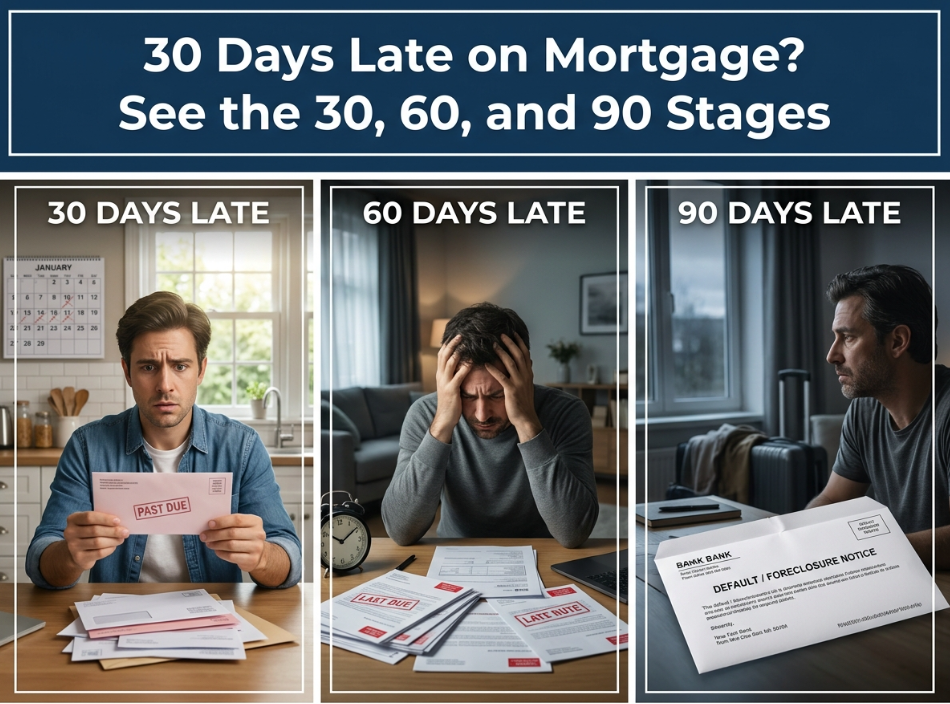
30 Days Late on Mortgage? See the 30, 60, and 90 Stages
30 Days Late on Mortgage? What Really Changes at 30, 60, and 90 Days in NC
If you are 30 days late on your mortgage, you are not automatically in foreclosure. You are, however, past the point where one missed payment feels temporary.
What matters now is whether one missed payment becomes two, then three. The longer that continues, the harder the problem becomes to fix without pressure.
Before 30 Days, Deal With the Payment You Actually Missed
A mortgage can be late for several days without being 30 days delinquent. Your loan may also give you a short grace period before fees appear.
If payday is close, call the servicer and ask what amount makes the account current today. Do not assume your normal monthly payment is enough.
Before the month rolls over, find out:
- The exact amount currently due
- Whether a late fee was added
- When the grace period ends
- Whether another payment is about to come due
- Whether a returned payment changed the balance
- Whether escrow or insurance changed the normal payment
What Happens If You Are 30 Days Late on Mortgage?
At 30 days late on a mortgage, the servicer may report the delinquency to the credit bureaus. That can affect credit even though foreclosure has not started.
Federal rules also require many servicers to begin early contact and send information about possible loss mitigation help. The CFPB explains those servicing duties clearly.
Ask the servicer:
- What amount brings me completely current?
- Has the late payment been reported?
- What hardship options are available?
- What documents do you need?
- Is another payment already due?
- When will the next late fee be added?
Sixty Days Late Is Where the Math Gets Harder
At 60 days late on a mortgage, two regular payments may now be unpaid. The arrears can grow much faster than most household budgets can absorb.
Suppose your payment is $1,850. Two missed payments equal $3,700 before late charges, while another $1,850 payment may already be getting close.
Put the household numbers on paper:
- Take-home income
- Normal mortgage payment
- Food and utilities
- Transportation and insurance
- Childcare or medical costs
- Other secured debts
- Money actually left for arrears
- Savings you can use without emptying your emergency fund
If the numbers do not work: promising more than the budget can carry only creates another missed payment. Review the earlier foreclosure-prevention options instead.
Can You Catch Up After Two Missed Payments?
Yes, sometimes. A short job interruption may end, overtime may return, or another temporary expense may disappear. The important question is what happens financially afterward.
Spreading $3,700 over six months adds about $617 monthly. If your regular mortgage is already tight, that extra amount may make the arrangement unrealistic.
A catch-up plan should still leave room for:
- The next regular mortgage payment
- Food and household utilities
- Transportation
- Insurance
- Childcare
- Minimum debt payments
- A small emergency cushion
Ninety Days Late Requires a Bigger Decision
At 90 days late on your mortgage, you may be three full payments behind. The question now is whether the mortgage still fits your household income.
A short job gap can end. A permanent pay cut, divorce, or new caregiving expense may not. Those situations need very different financial answers.
By this stage, get these figures in writing:
- Total arrears
- Current reinstatement amount
- Full mortgage payoff
- Status of any assistance application
- Missing documents
- Whether the loan has been referred for foreclosure
- Any known legal deadline
- The name or department handling your loss-mitigation file
Keep this distinction clear: being 90 days late on your mortgage does not automatically mean a North Carolina foreclosure has started, but the federal 120-day threshold is close.
The Timeline Is Easier to Understand This Way
The numbers matter, but the real change is what you need to decide at each stage. Thinking that way makes the timeline much more useful.
| Stage | What is changing | The useful question |
| Under 30 days | Late fees and another due date | Can I become current before the next payment? |
| 30 days | Credit reporting becomes possible | Can I stop one missed payment becoming two? |
| 60 days | Arrears are harder to absorb | Can my budget support a catch-up plan? |
| 90 days | Formal foreclosure risk is closer | Is this mortgage still affordable long term? |
| 120+ days | A foreclosure filing may become possible | What deadlines and formal options apply now? |
This is not a guaranteed schedule for every loan. Servicer procedures, assistance applications, investor rules, and loan terms can change the exact path for you.
What Changes Around 120 Days in North Carolina?
Federal rules generally prevent the first foreclosure notice or filing until a borrower is more than 120 days delinquent, although limited exceptions can still apply.
North Carolina also requires a pre-foreclosure notice for many primary-residence loans. The state law generally requires that notice at least 45 days before filing begins.
If that notice arrives, compare it with your records:
- Last payment credited
- Past-due amount
- Added fees
- Servicer contact details
- Assistance information
- Date shown on the notice
- Any figure that does not match your statements
Do not ignore a mismatch: an incorrect payment date or unexpected charge is easier to investigate before the hearing stage than after legal deadlines begin moving.
Catching Up Is Not Enough if the Mortgage Still Does Not Fit
A homeowner can clear the arrears and still have an unaffordable mortgage. That is why the reinstatement amount should never be the only number considered.
Imagine borrowing $6,000 from family, becoming current, then facing the same monthly shortage thirty days later. The account improved, but the household problem did not.
Look six months ahead and include:
- Regular mortgage payment
- Taxes and insurance
- Utilities
- Food and transportation
- Childcare
- Other debts
- Normal home repairs
- Income you genuinely expect to receive
- Any income that may end or change soon
The honest test: if those numbers still leave a monthly shortfall, catching up may only postpone the same problem rather than solve it.
When a Backup Property Plan Becomes Worth Considering
One missed payment is not a reason to rush into selling. A temporary setback may resolve once income returns and the normal mortgage becomes manageable again.
A backup plan becomes more useful when arrears keep growing, assistance does not solve the payment issue, or the house no longer fits the household budget.
Before considering a sale, find:
- Current mortgage payoff
- Second mortgage or HELOC balance
- Tax or HOA liens
- Realistic property value
- Likely selling costs
- Available equity
- Time needed to close
Where FixItMoney fits:
- Property review: We can look at arrears, payoff, equity, condition, and available time for North Carolina homeowners.
- Possible route: If keeping the mortgage no longer works, an as-is home sale or another property-based option may be worth comparing.
- Important limit: FixItMoney is not a mortgage servicer or law firm, so loan assistance and legal questions still belong with the appropriate professional.
Start With the Next Payment, Not the Worst-Case Scenario
If you are 30 days late on your mortgage, start with the amount due today, why the payment was missed, and whether next month’s mortgage is affordable.
At 60 days, test the catch-up plan against your real budget. At 90 days, decide whether you are fixing a temporary setback or carrying an unaffordable loan.
Three answers matter most:
- What amount makes the loan current today?
- Can the household afford the regular payment in the future?
- What happens if another payment comes due before you catch up?
- If the account keeps slipping, review the later North Carolina foreclosure deadlines before legal deadlines control more of the decision.
Mortgage Forbearance End Date: 7 Ways to Plan Ahead
Mortgage Forbearance End Date: 7 Options to Check Before Payments Resume
Your mortgage forbearance end date matters because the payment pause is temporary. Once it arrives, you need a clear plan for the payments you skipped.
The best next step depends on what changed during forbearance. Start with your current income, regular mortgage payment, missed balance, savings, and available servicer options.
When Does Mortgage Forbearance End? Check Your Own Agreement
There is no single 2026 date when every mortgage forbearance ends. Your written agreement should show when your current plan expires and regular payments restart.
For a current plan, use your agreement and current servicer instructions.
Before calling the servicer, have these details ready:
- The date your forbearance ends
- The next payment due date
- The amount skipped or reduced
- Your current monthly payment
- Any escrow shortage
- Whether the hardship has actually ended
Reinstatement Fits Best When You Can Truly Afford the Lump Sum
Reinstatement means paying the missed amount and bringing the loan current at once. It can work well when income has recovered, and cash is available.
Do not empty your savings simply to clear the arrears. Ask for a written reinstatement figure, then check what remains for normal household expenses afterward.
Reinstatement is more realistic when:
- The hardship was temporary
- Your normal payment fits again
- You do not need expensive new debt
- Emergency savings remain afterward
A Repayment Plan Only Works if the Higher Payment Fits
A repayment plan adds part of the missed balance to your normal mortgage for several months. Your payment stays higher until the arrears are repaid.
If a $1,900 mortgage becomes $2,450 for eight months, use $2,450 in your budget. Do not judge the plan using your old payment amount.
Compare that temporary payment with:
- Take-home income
- Food and utilities
- Transportation
- Insurance
- Childcare or medical costs
- Required debt payments
The CFPB mortgage repayment guidance says borrowers should understand the new amount and decide whether they can afford it before agreeing.
Can You Defer Mortgage Payments After Forbearance?
A payment deferral may let you resume regular monthly payments while moving eligible missed amounts to the end of the loan or another later payoff event.
This can fit when your income has recovered enough for the normal mortgage, but you cannot manage a lump sum or a temporarily higher monthly payment.
Ask how the deferral works on your loan:
- How much will be deferred?
- When does it become due?
- Does interest continue?
- Will the regular payment change?
- Does your loan qualify?
For Fannie Mae loans, payment deferral can move the deferred balance to a later payoff event while the borrower resumes the regular monthly mortgage payment.
A Partial Claim May Be Available on Some Government-Backed Loans
Some government-backed mortgages handle arrears through a partial claim. With FHA loans, eligible past-due amounts may be placed into a separate subordinate balance for later repayment.
HUD’s current FHA loss mitigation guidance says certain partial claims become due later, including when the mortgage ends or the property is sold.
If you have an FHA-insured mortgage, ask whether a partial claim or another current FHA home-retention option applies. Other mortgage types may follow different rules today.
Loan Modification After Forbearance Can Help When the Old Payment No Longer Works
A loan modification after forbearance may deserve attention if the hardship changed your finances enough that the original monthly payment is no longer affordable today.
Before accepting new terms, compare the monthly payment, loan term, interest treatment, escrow, unpaid balance, and any trial-payment requirement included in the offer before signing.
If an earlier request was rejected, our loan modification denial guide explains what to check before assuming modification is completely finished.
If the Hardship Is Still Going, Ask About More Time Before the End Date
A mortgage forbearance ending does not guarantee another extension. Still, contact the servicer before expiration if the hardship that caused the payment pause continues today.
Explain what has changed since the plan began and what you can afford now. Get any extension or replacement arrangement in writing before missing another payment.
Useful questions include:
- Am I eligible for more forbearance?
- What would the new end date be?
- When will normal payments restart?
- Do you need updated hardship documents?
Does Mortgage Forbearance Affect Credit?
Forbearance is different from simply stopping payments without an agreement. Credit reporting depends on the account status, the forbearance terms, and applicable credit-reporting requirements today.
CFPB says servicers may report that an account is in forbearance. If your account was otherwise current, certain federal credit-reporting protections may also apply today.
Check your credit reports during and after forbearance. If the mortgage is reported incorrectly, dispute the error and keep your agreement and payment records together.
Check the First Payment After Forbearance Before the Due Date
The first payment after forbearance may not match the amount you remember. Taxes, homeowners insurance, or an escrow shortage can change the monthly bill significantly.
Read the statement before the due date. If the number increased, ask what changed instead of discovering the difference only after another payment becomes late.
Look for:
- New monthly payment
- Escrow shortage
- Tax or insurance changes
- Updated autopay amount
- Unexplained fees
- How missed payments were handled
What Happens After Mortgage Forbearance Ends if No Plan Is Ready?
If the end of mortgage forbearance arrives without a repayment arrangement, the skipped balance still needs a solution, and the mortgage may remain delinquent afterward.
Do not assume silence means the forbearance continued. Ask the loss-mitigation department for your current status, the amount due, and every option still available now.
If the account is moving toward foreclosure, review our North Carolina foreclosure options before legal deadlines begin controlling more of the decision.
When Keeping the Mortgage No Longer Works, Review the Property Side
Sometimes the missed balance is manageable, but the regular mortgage is not. A permanent income drop can make every post-forbearance option feel temporary or unaffordable.
Compare the mortgage payoff, other liens, realistic home value, available equity, property condition, and time needed to sell before choosing a property-based exit strategy carefully.
Routes worth reviewing may include:
- A traditional sale when time and condition allow
- An as-is home sale when repairs or timing create problems
- A mortgage payment takeover where that structure fits the property and loan
- Reviewing how FixItMoney works before discussing a private property solution
FixItMoney works with North Carolina homeowners reviewing property-based options during mortgage distress. We are not a mortgage servicer, government program, or law firm.
Compare the Seven Options Before Payments Resume
Before the forbearance ends, use the numbers you have today. Your income, regular mortgage, missed balance, essential expenses, and savings should guide the conversation carefully.
| Your situation | Option worth asking about |
| Cash is available, and the normal payment fits | Reinstatement |
| You can handle a temporarily higher payment | Repayment plan |
| The normal payment fits, but arrears do not | Payment deferral |
| Your government-backed loan allows it | Partial claim |
| The old payment no longer fits | Loan modification |
| The hardship is still temporary | Extension, if eligible |
| Keeping the mortgage no longer works | Property backup plan |
The table is a starting point, not an approval list. Confirm eligibility and exact terms with your servicer, then choose what your household can realistically sustain.
Behind on Mortgage Payments? See If You Can Catch Up
Behind on Mortgage Payments? 7 Numbers That Show If You Can Catch Up
If you are behind on mortgage payments, counting missed months is only the starting point. The harder question is whether your household can realistically recover.
Seven numbers give you a clearer answer. They show what must be paid, what your budget can carry, and whether catching up is financially sustainable.
1. Get the Current Reinstatement Amount
Your regular mortgage payment may no longer match the amount needed to become current. Missed installments, escrow changes, and allowed charges can raise the total.
Ask the servicer for a written reinstatement figure and a breakdown. Do not confuse it with the payoff amount, which covers the entire remaining loan.
Check the quote for:
- Past-due principal and interest
- Late charges
- Escrow shortages
- Legal or property inspection costs
- The date the quote expires
- Any charge you do not recognize
2. Count the Payments the Servicer Shows as Unpaid
Saying you are 2 months behind on your mortgage sounds straightforward, but account histories are not neat. Partial payments and returned drafts can change the picture.
Match the servicer’s payment history against your bank records. If money appears as unapplied funds, ask when it will be credited and what remains due.
Write down:
- Date of the first missed payment
- Number of full installments unpaid
- Partial payments already sent
- Returned or reversed payments
- Any suspense or unapplied balance
3. Use the Mortgage Payment Due Now
Do not calculate with last year’s mortgage amount. Taxes, homeowners insurance, adjustable rates, or escrow changes may have increased the payment you owe today already.
Catching up only works if that regular payment remains affordable afterward. Clearing old arrears while next month’s bill is already too high solves very little.
- Example: A payment that rose from $1,780 to $1,970 costs another $190 every month. That difference belongs in the recovery calculation.
4. Use Income the Household Can Actually Rely On
Build the plan with dependable take-home income. A good overtime month or occasional commission can help, but it should not carry a long repayment promise.
If your income recently fell, use what you reasonably expect now. A plan based on your paycheck can look workable while failing in real life.
Count dependable income such as:
- Net wages or salary
- Stable self-employment income
- Pension or retirement income
- Reliable support payments
- Other recurring household income
- A cautious average if monthly income changes
5. Add the Bills That Do Not Disappear While You Catch Up
Falling behind on the mortgage does not stop the rest of the household bills. Food, utilities, transportation, insurance, childcare, prescriptions, and required debts still continue.
Cutting optional spending can help, but an impossible budget proves nothing. Keep enough room for expenses that a real household cannot simply switch off entirely.
Keep these costs in the budget:
- Groceries and utilities
- Transportation
- Insurance
- Childcare
- Medical costs
- Minimum debt payments
- Necessary home expenses outside escrow
6. Find the Amount You Can Safely Put Toward Arrears
Subtract the regular mortgage and essential expenses from reliable take-home income first. The amount left gives you a realistic starting point for monthly catch-up payments.
Suppose income is $5,700, the mortgage is $1,900, and essential expenses total $3,050. You have $750 left before irregular household costs appear.
- Safer approach: Do not automatically promise the full $750. A $550 or $600 payment may leave enough room for car repairs, school costs, or medicine.
7. Calculate How Many Months Recovery Would Take
Divide the reinstatement amount by the extra amount you can safely pay each month. The result gives you a rough recovery period, not a guarantee.
If you owe $4,200 and can add $700 monthly, the math points to roughly six months before allowing for changing fees or new servicer requirements.
Your result |
What it suggests |
| A few manageable months | A repayment plan may fit |
| Almost every spare dollar is needed | The plan has little room for surprises |
| Recovery takes many months | Ask about other loss-mitigation options |
| The regular mortgage still does not fit | The long-term payment is the larger problem |
Two or Three Payments Behind? Ask Where Partial Payments Go
When you are 3 payments behind on your mortgage, sending one payment does not always reduce the delinquency exactly as expected. Ask before moving the money.
The CFPB guidance on partial mortgage payments says a servicer may credit, return, or hold a partial payment in suspense, depending on applicable rules and the loan arrangement.
Before paying, ask:
- Will this payment be applied immediately?
- Will it sit in a suspense account?
- How much will remain past due?
- Will the payment change my delinquency status?
My Mortgage Is Too High. What Can I Do?
Sometimes arrears are only part of the problem. If the normal mortgage payment no longer fits your income, catching up may only postpone another shortage.
Ask your servicer about options available for your loan and hardship today. Depending on the situation, those may include repayment, forbearance, payment deferral, or modification.
- If modification was denied, review the loan modification denial guide before assuming every available route has closed.
How Far Behind on Mortgage Before Foreclosure?
Federal rules generally prevent the first foreclosure notice or filing until a borrower is more than 120 days delinquent, subject to limited exceptions.
North Carolina separately requires mortgage servicers to send a pre-foreclosure notice at least 45 days before filing a Notice of Hearing for covered primary-residence loans.
If notices have started:
- Keep every letter and date together
- Finish requested loss-mitigation paperwork promptly
- Confirm your current loan status directly with the servicer
- Review the North Carolina foreclosure prevention guide before the legal process moves further
What If the Numbers Say Catching Up Is Not Realistic?
A permanent pay cut, divorce, medical costs, or higher recurring bills can make the regular mortgage completely unaffordable even if you somehow clear today’s arrears.
Borrowing more money simply to become current may create another crisis later. Compare the mortgage problem with the property’s numbers before choosing your next step.
Gather:
- Full mortgage payoff
- Second mortgage or HELOC balance
- Tax or HOA liens
- Realistic property value
- Likely selling costs
- Available equity
- Any foreclosure deadline already received
- Why these matter: They show whether selling could preserve equity or whether keeping the home still makes better financial sense.
When the Property Becomes Part of the Decision
If the budget no longer supports the mortgage, the house itself becomes part of the calculation. Value, payoff, liens, condition, equity, and timing all matter.
FixItMoney works with North Carolina homeowners who need to review those property numbers before deciding whether a private real estate solution makes sense.
Relevant property options to review:
- Compare an as-is home sale if repairs, timing, or traditional selling costs create another obstacle.
- Review the mortgage payment takeover option if that structure fits the mortgage and property situation.
- Read how FixItMoney works before discussing the property, timing, and information needed for an initial review.
Put the Seven Numbers on One Page
Keep the figures somewhere you can update them after every servicer call. You do not need complicated software to see whether the recovery plan works.
They should answer one practical question: can you become current without making next month’s mortgage, another bill, or ordinary household life unaffordable in the process?
Keep these seven figures together:
- Reinstatement amount
- Payments actually missed
- Current monthly mortgage payment
- Reliable take-home income
- Essential non-mortgage expenses
- Safe monthly catch-up amount
- Months needed to become current
- If the numbers work: Ask the servicer what approved repayment option matches them.
- If they do not: Build a backup before another missed payment narrows your choices.
Latest Blogs

How to Redeem Property After a Tax Sale: SC Timeline
How to Redeem Property After a Tax Sale in South Carolina Before the Deadline How to redeem property after a tax sale in South Carolina

Sell a House With Delinquent Property Taxes: NC Options
How to Sell a House With Delinquent Property Taxes in North Carolina You can usually sell a house with delinquent property taxes in North Carolina
Unpaid Property Taxes in NC: Timeline, Costs, Options
Unpaid Property Taxes in NC: What Happens and When Unpaid property taxes in NC become delinquent on January 6, after North Carolina real property taxes